
how to make international calls cheap
How to Make International Calls Cheap Without Hidden Fees

The simple answer? Ditch your old phone carrier for international calls and use a modern VoIP (Voice over Internet Protocol) service instead. VoIP runs over your internet connection, completely bypassing the expensive, old-school phone networks.
This one simple change can slash your international calling costs by as much as 90% compared to what you’re paying your mobile carrier right now.
Ever gotten a phone bill after calling family or clients abroad and felt that sting of regret? You’re not alone. The high cost isn’t random—it’s the result of an outdated, complicated system built by traditional telephone companies.
When you make a standard international call, it's not a direct connection. Your voice is passed through a messy web of different networks owned by different carriers in different countries.
Think of it like a journey with multiple toll roads. Each carrier that helps connect your call takes a cut, adding their own fee for using their network. By the time the call reaches its destination, all those little fees have been bundled up and passed on to you.
Here’s where the costs come from:
For decades, this was the only way, so carriers could charge whatever they wanted. Rates of $1 to $3 per minute were normal, making even a short chat feel like a luxury.
Luckily, technology has given us a much better way. The global demand for affordable calling has created a market now worth USD 35.5 billion, which is expected to grow to USD 47.9 billion by 2031. Innovators in this space have figured out how to skip the old, expensive system entirely. You can learn more about this growing market from this global calling services report on 6wresearch.com.
Instead of using old-fashioned phone lines, modern browser-based VoIP services like YodelPhone turn your voice into digital data and send it over the internet. This simple shift cuts out almost all the middlemen, leading to huge savings.
We’ve all seen how much traditional carriers charge versus modern services. The difference is staggering.
This table gives you a clear, at-a-glance look at just how much you can save on a typical 10-minute call by switching from a traditional carrier to a VoIP service like YodelPhone.
| Calling Method | Example Cost Per Minute | Estimated 10-Minute Call Cost | Key Downside |
|---|---|---|---|
| Traditional Mobile Carrier | $1.00 - $3.00 | $10.00 - $30.00 | Extremely high costs, often with additional monthly plan fees. |
| VoIP (e.g., YodelPhone) | $0.01 - $0.15 | $0.10 - $1.50 | Requires a stable internet (Wi-Fi or mobile data) connection. |
The numbers don't lie. By using your existing internet connection, VoIP platforms connect your call directly, avoiding all those expensive carrier handoffs.
The result is a simple, pay-as-you-go model that gives you crystal-clear call quality for just pennies per minute. It’s the smartest way to make international calls without sacrificing quality or breaking the bank.
Let's be honest, wading through the dozens of international calling apps can feel like a chore. They all promise cheap calls, but not all are created equal. The right choice really boils down to who you're calling and why.
Your decision is ultimately a trade-off between convenience, call quality, and cost. A freelancer needing a crystal-clear connection for a client meeting has completely different needs than someone just catching up with family.
This simple flowchart breaks down the main decision you'll face. For pretty much any call that crosses a border, a VoIP service is going to be the smarter, cheaper option compared to your regular cell phone provider.
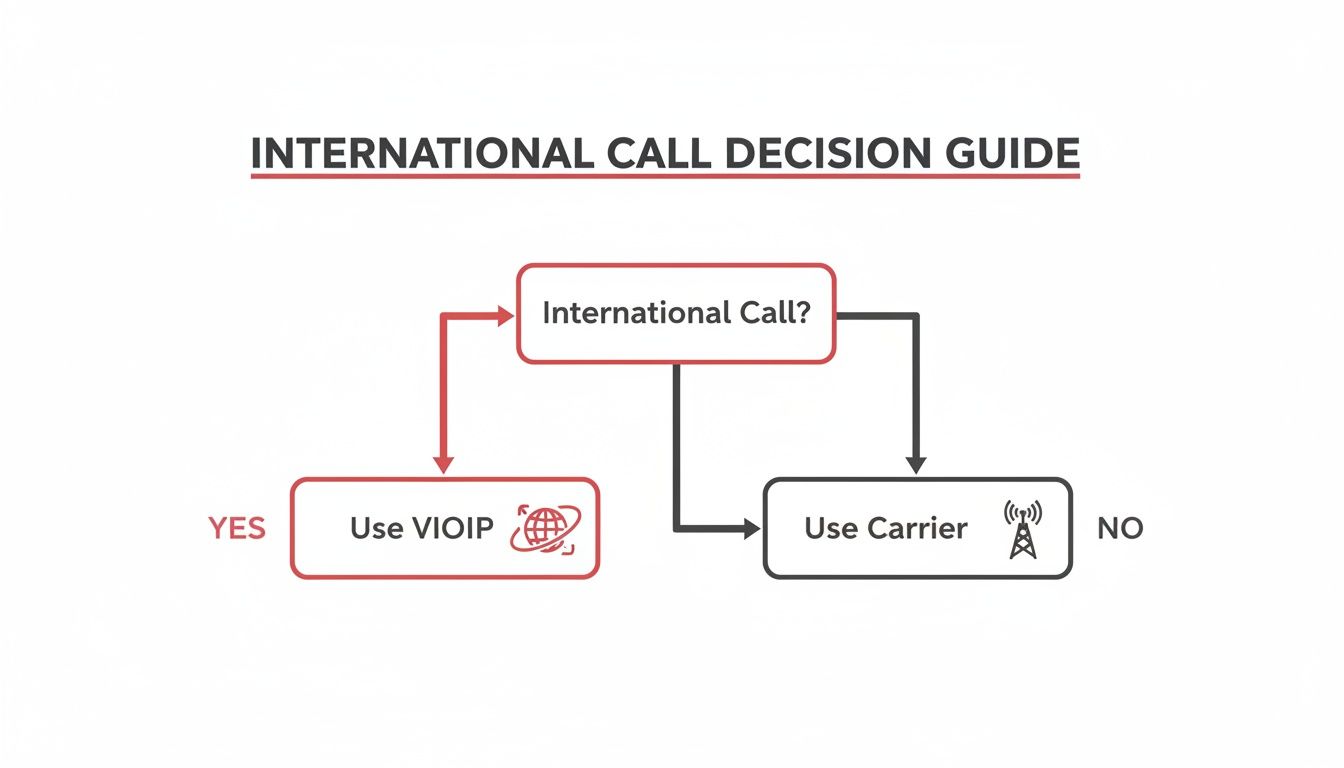
As you can see, using the internet for your calls (VoIP) is the most effective strategy for making cheap international calls. It’s best to save your traditional carrier for calls within your own country.
These are the specialists. They're built for one thing: making high-quality, low-cost calls over the internet. Platforms like YodelPhone are designed for reliability and simplicity, working right from your web browser with zero downloads.
This category includes apps you probably already use, like WhatsApp, FaceTime Audio, and Facebook Messenger. They offer free calling, but there's a huge catch: they are "closed-loop" systems. This means both you and the person you're calling must have the same app installed and be online at the same time.
Key Takeaway: If you need to reach a business, an older relative without a smartphone, or any landline on the planet, a messaging app just won't cut it. This is the single biggest limitation to keep in mind.
Once the go-to option, physical and virtual calling cards are fading out for a reason. They require you to buy prepaid credit, dial an access number, punch in a long PIN, and then finally dial the international number.
For a deeper dive into the different app categories and their specific features, check out our guide on the best international calling apps available today. Making an informed choice is the first step toward significant savings and hassle-free global communication.
Forget about downloading clunky software or dealing with complicated setups. The best part about modern browser-based VoIP services is how ridiculously simple they are. You can go from signing up to dialing an international number in just a few minutes, using the laptop or computer you already have.
I'll walk you through the process using a service like YodelPhone to show you just how straightforward it is to make your first cheap international call, minus the technical headaches.
This is the kind of clean, simple interface you can expect. It's designed to let you make a call with a single click, without getting lost in menus.
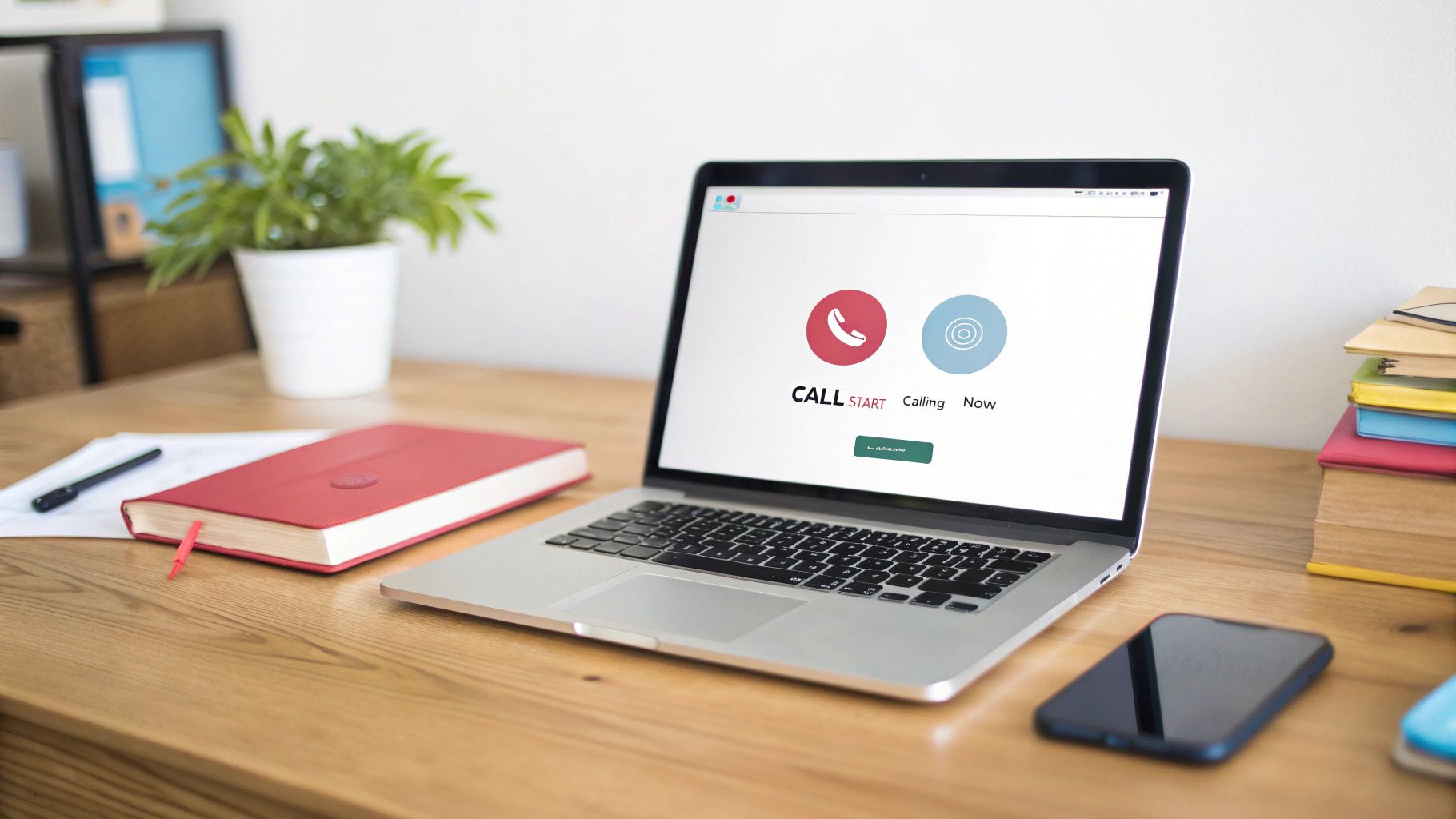
The focus is entirely on the task at hand—making the call—without any of the unnecessary clutter.
First things first, you'll need an account. This is usually a quick, free sign-up that doesn't ask for a credit card upfront. All you typically need is an email. Many services, including YodelPhone, even give you a little free trial credit so you can test the call quality right away.
Once you’re in, you'll see a simple dial pad right there in your browser tab. No software to install. This is a game-changer because it means you can log in and make calls from any computer with an internet connection.
Before you dial, you need to know what you're paying. Transparency is key. Any good browser-based service will have a clear, easy-to-find rate checker. You just select the country you want to call and see the exact per-minute cost instantly. This gets rid of the guesswork.
Making the actual call works just like your regular phone:
The cost savings here are immediate and massive. International calling costs have plummeted thanks to VoIP, with the market projected to hit $75 billion by 2030. Cloud platforms consistently undercut traditional carriers by 80-95% on average. A freelancer calling a client in Asia, where carrier rates might be $0.50/minute, can use a service like YodelPhone for as little as $0.01/minute.
These platforms offer more than just cheap calls; they come with useful tools to help you stay organized, especially if you're a freelancer or run a small team.
These simple, built-in features turn a basic calling tool into a powerful communication hub. And if you're curious about totally free options, it's also worth checking out our guide on how to make an international call for free, which covers the different methods and their limitations.
Choosing the right service is a huge win, but your savings don't have to stop there. A few small tweaks to your calling routine can shave even more off your bill, making every conversation more efficient. Think of these as the insider tricks that separate casual callers from savvy ones.
It all starts with something simple: your internet connection. VoIP calls are entirely dependent on a stable signal. A weak or spotty connection means frustrating dropouts, and every time you have to redial, you could be hit with a new connection fee or waste precious seconds of a per-minute charge.
Before any important call, do a quick check. Are you on a strong Wi-Fi signal? If you're on the go, make sure you have solid 4G or 5G. This one simple habit prevents dropped calls and ensures you get the crystal-clear audio quality you're paying for.
Another pro move is timing your calls strategically. While many VoIP providers offer flat rates, some traditional carriers or niche services still offer off-peak discounts. Calling late at night or on a weekend in the destination country might just snag you a lower rate.
Even more importantly, being aware of time zones is just good etiquette. It shows respect for the person you're calling and leads to a better, more productive chat. A well-timed call is rarely rushed, so you get more done and avoid the need for follow-ups.
A few practical tips I always follow:
Many services will try to lock you into a monthly subscription, promising a huge bucket of minutes to certain countries. It sounds tempting, but for most individuals or small teams, it's a financial trap. Why pay for 1,000 minutes when you only use 200?
A pay-as-you-go model is almost always the smarter financial decision. It gives you total flexibility, making sure you only pay for the exact minutes you use. This approach kills wasted spending and keeps your budget lean—the core principle of making international calls cheap.
Think about a freelance designer. One month, they're on daily calls with a client in London. The next month? Zero international calls. With a pay-as-you-go service like YodelPhone, their costs scale directly with their work, dropping to zero when the calls stop. It aligns spending perfectly with actual use, so you never pay for something you aren't using.
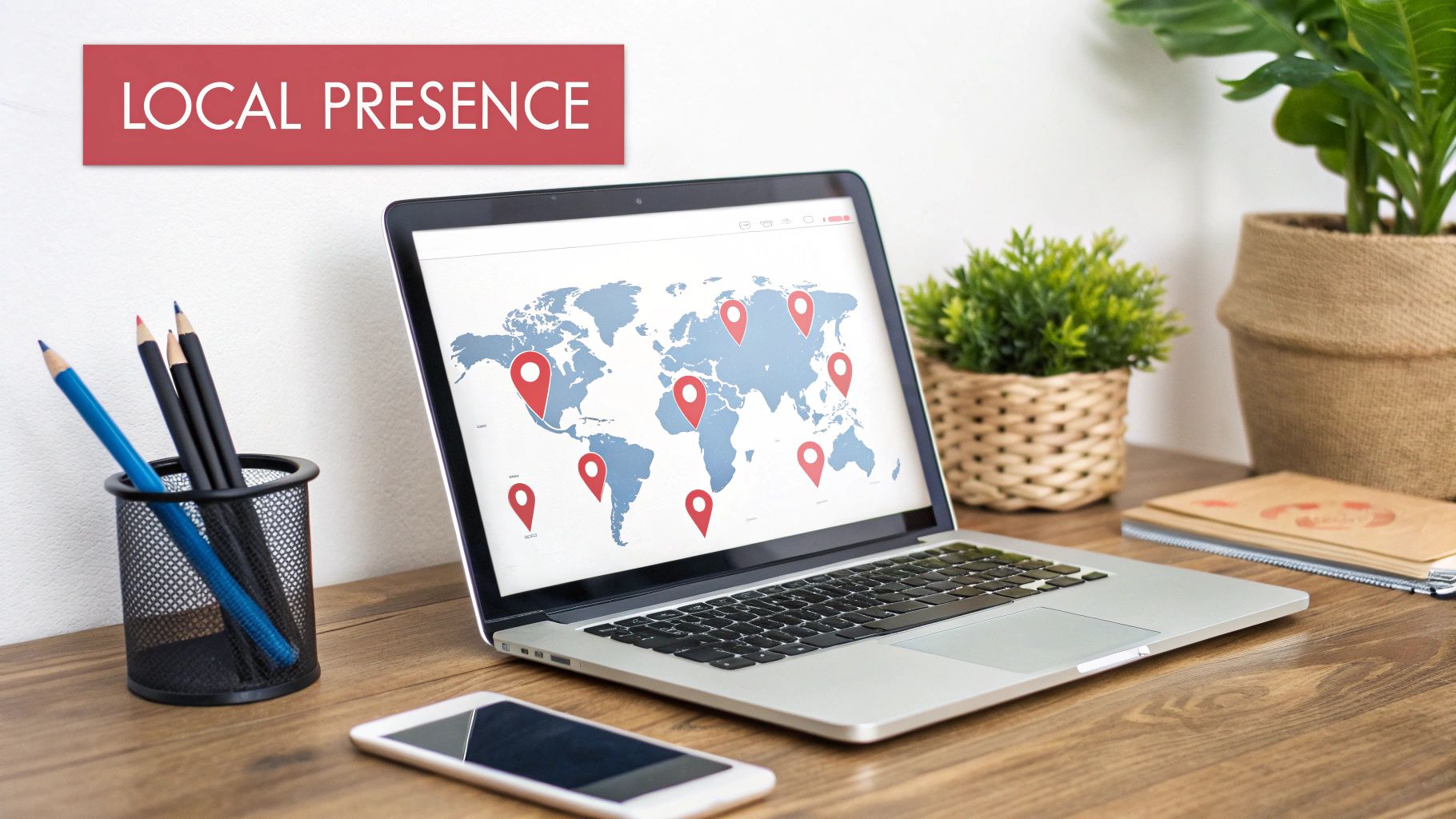
For freelancers and small businesses, cheap international calls aren't just about saving a few bucks. It's a secret weapon for growth. With the right VoIP service, you can do more than cut costs—you can build a credible, local presence in markets thousands of miles away.
How? Through a clever feature called a virtual international number. It’s a local phone number for a country you’re not physically in.
Imagine you're a consultant based in New York calling a potential client in London. Instead of them seeing an unfamiliar US number pop up, their caller ID shows a local UK number. That small change makes all the difference. People are far more likely to answer a call from a number they recognize, instantly turning a cold outreach into a warmer conversation.
A virtual number doesn't just get your call answered; it makes your brand look more professional. When clients see that local number, it sends a clear message: you're serious about their market. It’s a subtle but powerful way to look established and accessible, even if your "office" is just a laptop on your kitchen table.
This is a game-changer for small teams trying to compete with bigger, multinational players. A consistent, professional caller ID across all your international calls ensures your brand looks polished and reliable every single time.
Key Insight: A virtual number transforms international calling from a chore into a strategic asset. It’s not just about saving money; it’s about building a global footprint and connecting with customers on their own terms.
If you have a remote or distributed team, managing communication costs can quickly become a headache. Modern VoIP platforms solve this by offering centralized accounts with shared credits.
This means you can have a single billing account for your entire team. Everyone can make the calls they need without you having to juggle multiple subscriptions or process expense reports. It’s that simple.
For anyone serious about global expansion, it's worth taking a closer look at how a virtual phone number for business can open doors and build trust. This isn't just about cheap calls—it’s about laying the foundation for your international growth. It’s about being local, everywhere.
Making the switch from your old carrier to a newer way of calling always brings up a few questions. It’s smart to be a little cautious, especially when you’re wondering about call quality and what this is really going to cost you.
Let’s walk through the most common concerns to help you feel confident about making cheap international calls.
This is probably the biggest worry for most people. After decades of landline quality, the idea of making calls over the internet can sound a bit shaky. But modern VoIP (Voice over Internet Protocol) technology has come a ridiculously long way.
With a solid internet connection, today’s browser-based calling services deliver crystal-clear HD audio. Honestly, it's often impossible to tell the difference between a VoIP call and a traditional one. The only thing that matters is your internet—a stable Wi-Fi or 4G/5G signal is all it takes.
This means you don't have to choose between saving money and having a professional-sounding conversation. You get both.
An excellent and crucial question. Some services are notorious for bait-and-switch tactics. They'll advertise super low rates, but then tack on hidden connection fees, monthly "maintenance" charges, or round up your call time to the next full minute. It’s a frustrating game designed to nickel-and-dime you.
To sidestep these traps, always look for a provider with a dead-simple pay-as-you-go model. The per-minute rate you see on the website should be the exact rate you pay. No contracts, no subscriptions, no nonsense. It puts you in total control.
Here’s what to look for to ensure you're not getting ripped off:
This really depends on the service you pick. Some of the more basic platforms are for outbound calls only. You can call out, but nobody can call you back, which is a huge pain for business use or even just keeping in touch with family.
Thankfully, better services solve this problem in a couple of clever ways.
First, they let you set your own mobile or business number as your caller ID. When you call someone, they see your familiar number pop up and can call you back on your regular phone, just like normal.
Second, for a more permanent solution, you can get a dedicated virtual number for a specific country. This gives you a local number that people can dial to reach you, making it seamless for international clients or family to get in touch without it costing them a dime.
Ready to see how crystal-clear calls can be without the ridiculous price tag? YodelPhone offers a simple, browser-based solution with transparent pay-as-you-go pricing to over 180 countries. Start calling in seconds with a free trial—no downloads or credit card required.

Discover the best cheap way to make international calls. This guide compares VoIP, calling apps, and SIMs to help you connect globally without overspending.

Discover how to make cheap international calls from any device. Our guide explores the best apps, VoIP services, and tips for clear, low-cost calling.

Discover the cheapest international calling rates. Our guide compares VoIP, calling cards, and browser-based services to help you save on every call.
Learn how to make international calls with our guide to VoIP apps, dialing codes, and smart cost-saving tips. Start calling abroad without breaking the bank.