
international calls
Discover cheapest way to make international calls and save today

If you've ever been stung by a massive phone bill after a quick call overseas, you're not alone. The cheapest way to handle international calls is hands-down using Voice over Internet Protocol (VoIP) services. These route your calls over the internet, completely bypassing the old-school phone lines that traditional carriers still rely on. The result? Costs drop to just pennies per minute, and sometimes they're even free.
So, why does a simple call to another country cost so much with your mobile carrier? It all comes down to a tangled, ancient infrastructure that was never built for today's connected world.
When you dial an international number on a regular mobile or landline, your call gets bounced around a complicated web of different networks, each owned by a separate company.

Every single time your call jumps from one network to the next, that carrier slaps on an interconnection fee. These fees stack up fast, and the final, inflated cost gets passed right down to you. It's a clunky, expensive system that simply can't compete with modern technology.
The biggest problem with this outdated model is the total lack of transparency. The per-minute rate you see advertised is often loaded with hidden charges you never even think about:
This complex chain of fees is why calling a landline in London can have a totally different rate than calling a mobile in Mumbai—each call takes a unique and costly route. Once you understand this, it's easy to see why switching to a smarter approach makes sense. You can check out our guide to see exactly how international calling with VoIP works.
VoIP services skip this entire expensive mess. Instead of using traditional phone lines, they just convert your voice into digital data and zip it across the internet, cutting out nearly all of those old-world fees.
This is exactly why the global mobile VoIP market is absolutely booming. It was valued at USD 49.2 billion back in 2021 and is on track to hit an incredible USD 327.5 billion by 2031. It's a clear signal that people are fed up with paying outrageous prices and are moving away from old-fashioned phone networks for good. You can read more about this worldwide communication trend to see just how big the shift is.
The secret sauce behind cheap international calls isn't a secret at all—it's just a solid internet connection. But here’s where people trip up: thinking all internet connections are created equal. Whether you use Wi-Fi or mobile data can make a huge difference in your call quality and, more importantly, your final bill.
Let's break down when to use each.
Wi-Fi is almost always the default choice. Why? Because it’s usually free and doesn’t burn through your mobile data plan. When you're calling from your home, office, or even a hotel with a decent connection, you're getting the most stable and cost-effective experience. The signal is strong, consistent, and won't add a single surprise cent to your phone bill.
But we've all been there—that "free" coffee shop or airport Wi-Fi that's shared with a hundred other people. It's slow, it's unstable, and it's a recipe for dropped calls and choppy audio. That’s not just frustrating; it’s unprofessional.
This is exactly when mobile data steps in as your reliable backup. When you’re on the move or can’t find a Wi-Fi signal you trust, your phone's 4G or 5G connection can save the day, providing a crystal-clear call. It’s convenient and keeps you from being chained to a desk just to make an important call.
The big catch, of course, is the potential cost. VoIP calls do use data. A one-hour call can eat up anywhere from 20MB to 90MB, depending on the app and audio quality. That's nothing on an unlimited plan at home, but it's a whole different story when you're traveling.
Pro Tip: Never, ever use your domestic mobile data plan for international calls while roaming. The roaming charges are famously outrageous and will instantly wipe out any savings you made by using VoIP. Stick to local Wi-Fi or grab a local SIM/eSIM data plan when you're abroad.
To make the right call (pun intended), you need to know the real-world strengths and weaknesses of each option.
| Connection Type | Pros | Cons |
|---|---|---|
| Wi-Fi | Typically free and unlimited. Perfect for long chats on private, trusted networks. | Public Wi-Fi can be painfully slow, unreliable, and less secure. It also limits your movement. |
| Mobile Data | Super convenient and available almost anywhere. Usually offers a stable connection for clear audio. | Can get expensive, especially when roaming internationally. It also chips away at your monthly data allowance. |
So, what's the best strategy? It's a hybrid approach.
Lean on trusted Wi-Fi networks for the bulk of your calls to keep costs near zero. But don’t be afraid to switch over to mobile data when you need reliability on the go—just keep a close eye on your data plan.
For more ways to cut costs, check out our guide on how to make an international call for free.
Trying to figure out international calling plans can feel like a maze, but it really comes down to just two options: Pay-As-You-Go (PAYG) or a monthly subscription. The right choice for you depends entirely on how often you pick up the phone.
If your calls are few and far between, or just completely unpredictable, a PAYG plan is a lifesaver. Think of freelancers who might need to call a client in another country one month, but not the next. Or maybe you just call your family abroad on holidays. For those situations, a PAYG plan offers total flexibility—you add credit and only pay for the minutes you actually talk.
On the flip side, if you're constantly on the phone with business partners or family in certain countries, a subscription can be a massive money-saver. These plans usually give you a huge bucket of minutes (or even unlimited calls) to specific destinations for one flat monthly fee. For heavy users, this is almost always the more economical route.
The biggest draw of PAYG is the zero-commitment lifestyle. Services like YodelPhone are built on this idea, making sure you never waste money on minutes you don’t use. It’s simple: your cost is tied directly to your usage, which is perfect if you’re on a tight or fluctuating budget.
PAYG is the clear winner in scenarios like these:
For a deeper look at how this all works, check out our guide on the benefits of pay-as-you-go international calling. In any of these cases, being locked into a monthly plan would just be throwing money away.
If your calling schedule is as regular as your morning coffee, a subscription is almost certainly the way to go. When you know you'll be spending hours each month talking to contacts in a specific country, that flat fee can drop your per-minute cost to almost nothing compared to PAYG.
To help you visualize the best path forward, this decision tree shows whether to start with a Wi-Fi connection or fall back on mobile data for your call.
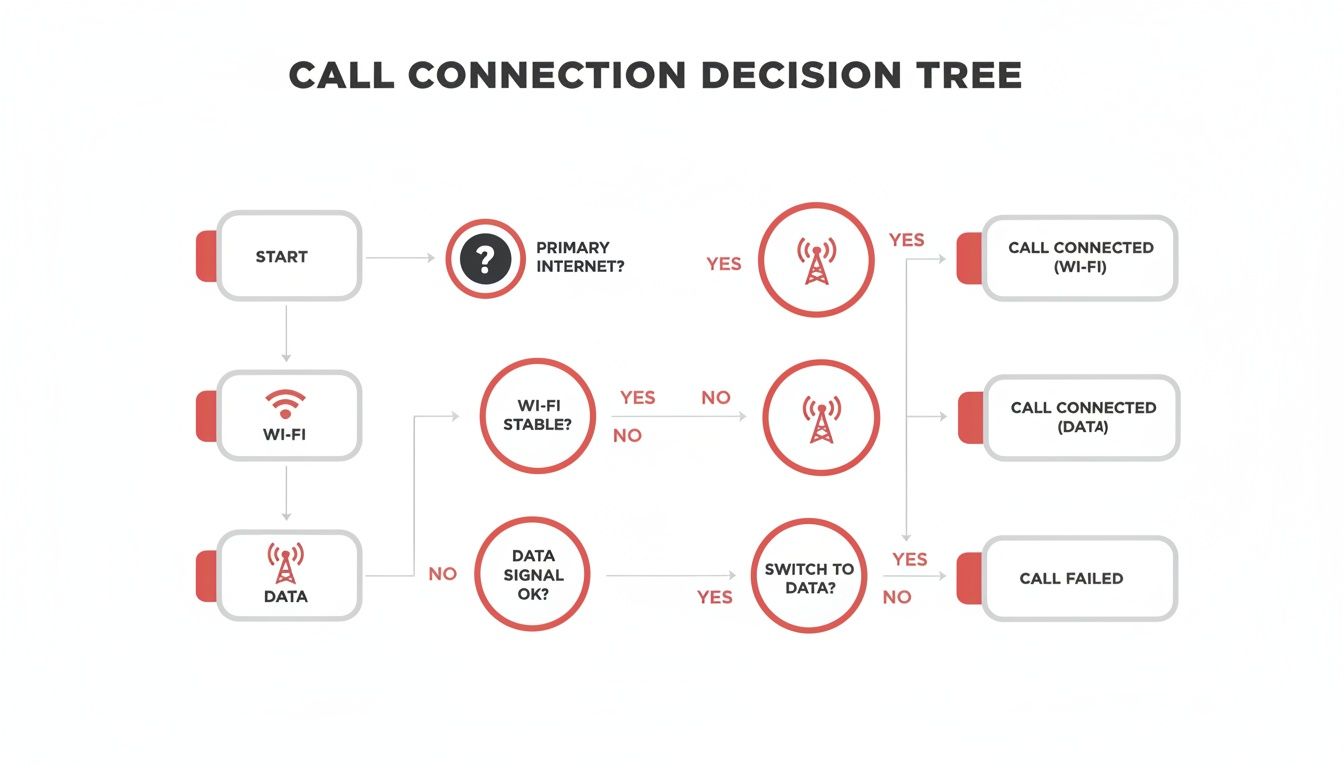
As the chart shows, always try Wi-Fi first. It’s usually cheaper and more stable. Only switch over to mobile data when you have to.
So, how do you choose? Here’s a quick breakdown to make it easier.
| Feature | Pay-As-You-Go (e.g., YodelPhone) | Subscription Plan |
|---|---|---|
| Best For | Infrequent or unpredictable calls | Frequent, regular calls to specific countries |
| Commitment | None. Add credit when you need it. | Monthly recurring fee. |
| Cost Structure | Pay per minute. You only pay for what you use. | Flat monthly rate for a set number of minutes. |
| Flexibility | High. Call any country anytime. | Low. Usually limited to specific countries or regions. |
| Risk | Low. No wasted money if you don't make calls. | High. You pay the fee even if you don't use the minutes. |
Ultimately, the choice comes down to your habits. PAYG is for freedom and flexibility, while subscriptions reward consistency and high volume.
Key Takeaway: Your calling frequency is the single most important factor. Seriously, track your calls for one month. How many did you make, where did they go, and how long did you talk? The answer will point you directly to the cheapest plan for you.
What if you could make a cheap international call right now, without downloading a single app or clearing space on your phone? That’s the magic of browser-based calling. It’s the ultimate shortcut for anyone who needs to connect immediately, whether from a laptop, tablet, or even their phone's browser.
This approach uses VoIP technology directly through your web browser—like Chrome, Safari, or Firefox—cutting out the need for installations entirely. You just go to a website, punch in a number, and click to call. It's the cleanest, fastest way to make an international call without any of the usual setup headaches.
The benefits are obvious. You don't use up precious storage on your device, and you don't have another app to keep updated. It’s perfect for making a quick call from a shared computer or when you just need to connect without any fuss.
The real advantage of browser-based services like YodelPhone is speed and accessibility. Forget about lengthy sign-up forms that force you to download software, create a complex account, and then learn a whole new interface. With browser calling, you can go from needing to make a call to being connected in seconds.
This is a game-changer for a few common situations:
Many browser-based platforms offer a free trial call, often without even asking for a credit card. This lets you dial a real international number and hear the connection quality for yourself, making it a truly risk-free way to find a service that actually works for you.
This screenshot from YodelPhone shows just how simple it is—literally just a dial pad on a webpage.
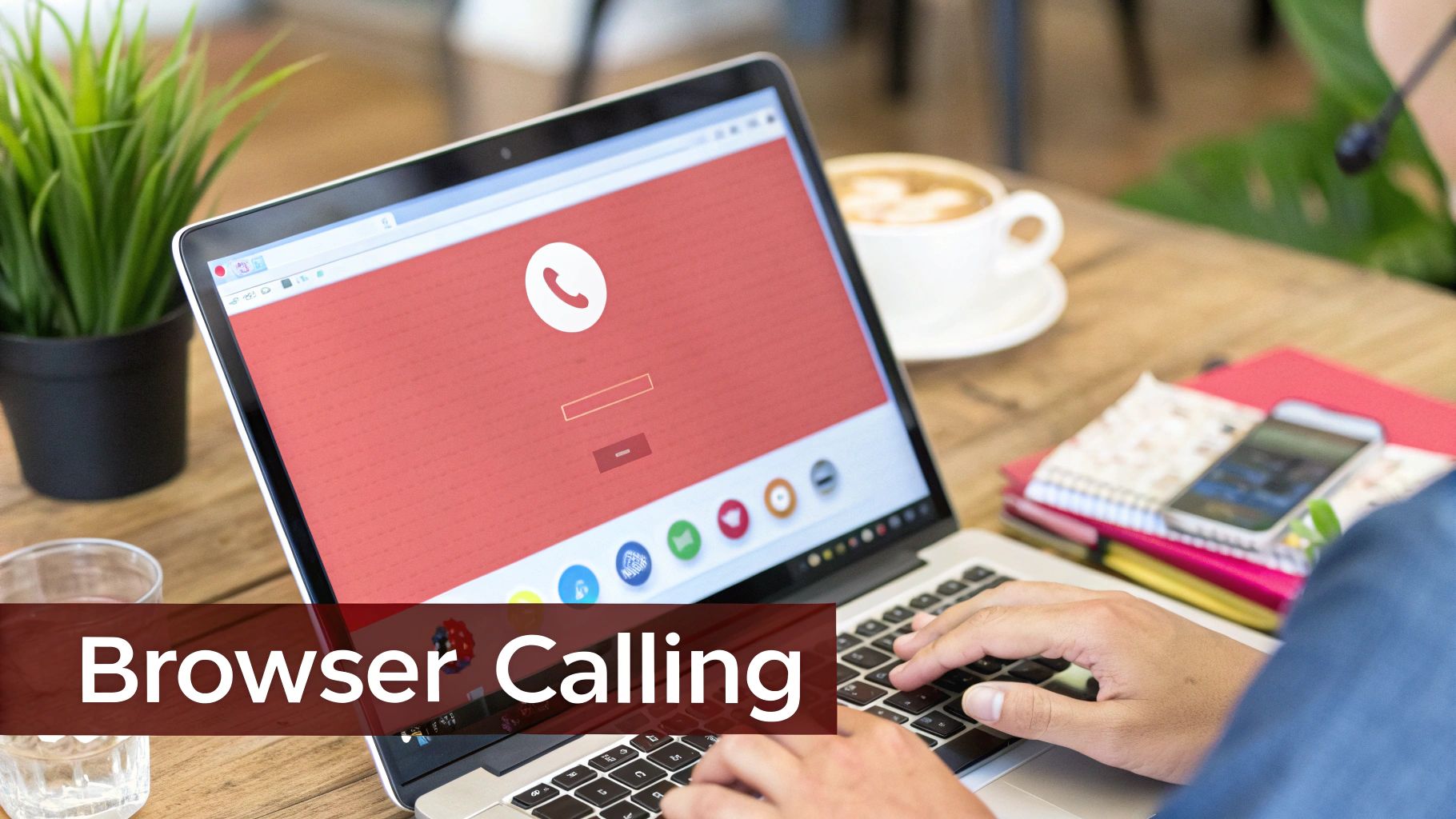
The key takeaway here is the total lack of complexity. The whole point is to get your call connected, not to make you jump through hoops.
Because these services run in a web browser, they work everywhere. It doesn't matter if you're on a Windows PC, a MacBook, an Android phone, or an iPhone. If your device has a modern browser and an internet connection, you can make a call.
This universal compatibility solves a common frustration with app-based services, where performance can be spotty between different devices or operating systems. A browser-based system delivers a consistent experience every time. It's the ultimate "it just works" solution for global communication, stripping away every possible barrier to making that call.
Finding the absolute rock-bottom per-minute rate is a solid first step, but it’s only half the battle. The real secret to mastering cheap international calls is learning to use the smart features that not only cut costs but also make you look more professional.
These tools are built to solve the common headaches of calling abroad. They ensure your calls are not just affordable, but actually effective.
Let's be honest. If you saw a call coming in from an "Unknown" number or a long, strange string of digits, would you answer it? Probably not. I wouldn't. This is precisely why a custom caller ID is so essential.
Modern VoIP services let you set your own verified mobile or business number as the outbound caller ID. When you dial, the person on the other end sees a familiar, trustworthy number, which dramatically increases the chance they'll pick up. It's a small tweak that prevents your important calls from getting ignored and maintains your professional identity, no matter where you're calling from.
If you're trying to build a presence in a new country, a local virtual number is an absolute game-changer. Instead of making your clients in London dial a US number (and pay for the privilege), you can get a UK-based virtual number that rings directly on your device, wherever you are.
This gives you two massive advantages:
A virtual number makes you look like a local business, even if your team is scattered across continents. It's an incredibly powerful way to build an international footprint without the expense of opening a physical office.
A dedicated local number is more than just a convenience; it's a strategic asset. It tells your international customers, "We're here for you," making your business feel approachable and local, which directly translates to better engagement and sales.
For anyone managing a team, tracking international call expenses can quickly become a nightmare of reimbursements and messy spreadsheets. This is another problem the right platform can solve with centralized team management.
You can set up a single team account, invite your members, and manage one central pool of shared calling credits. This gives you a crystal-clear, real-time overview of your company's spending. No one has to use their own money, and you can easily monitor usage through call logs and analytics. It’s essential for any business looking to operate globally while keeping a tight grip on the budget.
Trying to figure out international calling can feel a little confusing. Let's clear up some of the most common questions people have so you can start making cheaper calls today.
This is a classic "yes, but" scenario. Apps like WhatsApp, FaceTime, and Facebook Messenger are fantastic for calling other people who also use those exact apps. The catch? Both of you need the same app installed and a solid internet connection.
That system falls apart the moment you need to call a landline, a local business, or your grandmother who still uses a flip phone.
That’s where a low-cost VoIP service becomes the truly flexible option. You might pay a few cents a minute, but in return, you get the freedom to dial any real phone number on the planet.
Yes, and you absolutely should. Nothing screams "scam call" louder than a blocked or random number showing up on someone's phone. It looks unprofessional and, frankly, gets ignored most of the time.
A good VoIP service gets this. They let you set your existing mobile or business number as your caller ID. This one simple feature ensures friends, family, and clients know it's you calling, which means they'll actually pick up. It’s a small detail that makes a world of difference.
Key Insight: Using your own number as the caller ID isn't just a nice-to-have feature; it's a must for building trust. When people see a familiar number, they answer. It turns a potential missed connection into a real conversation.
Think of VoIP (Voice over Internet Protocol) as the powerful engine that runs all internet calling. Browser-based calling is like a sleek, simple car that uses that engine—no installation required.
It’s a way to use VoIP technology directly from a webpage in Chrome, Safari, or Firefox without downloading any software.
This makes finding the cheapest way to make international calls incredibly easy. It’s perfect for making a quick call from any computer or for trying a service like YodelPhone without any commitment. You just go to the website, type in a number, and you're connected in seconds.
Managing expenses for a team making calls all over the world can be a nightmare of receipts and reimbursements. The best VoIP platforms are built for businesses and offer centralized controls to make your life easier.
Look for a service that gives you a central dashboard where you can:
This kind of system gets rid of the paperwork and gives you a clear, real-time look at your communications budget, putting you back in control of your costs.
Ready to make your first call without the hassle? YodelPhone offers a browser-based platform with transparent, pay-as-you-go rates to over 180 countries. Try it now with a free one-minute call—no app or credit card required. Get started at https://yodelphone.com.

Try a free international call trial instantly in your browser - no downloads or card required. Test call quality and connect globally in seconds.

Discover how international VoIP calls can save you money and simplify global communication. Learn how they work and how to get started in minutes.

Discover voip international calling that delivers clear, affordable global calls from your browser. Learn pricing, setup, and start saving today.

Unlock affordable global calling with a pay as you go international phone service. Learn how to save on calls without contracts or hidden fees.